How generic GLP-1 peptides are made, tested and approved
Novo Nordisk makes semaglutide in yeast. Most generic makers will build it one amino acid at a time on a plastic bead, and then have to convince the FDA that the result is the same molecule with nothing extra stuck to it. That second part is where the money and the delays are.
Generic GLP-1s: Making the Molecule
33 minutes. A narrated research briefing from the GLP Generics editors, with every source checked.
Read what the episode covers
Semaglutide's Billions Reshape the Entire Industry
Somewhere around 2023, every executive at every drug company looked at Novo Nordisk's revenue figures and started making calls. Ozempic alone — one drug, one company — brought in roughly thirteen point seven billion dollars that year. Wegovy, the same molecule repackaged for weight loss at a higher dose, added another four and a half billion on top. That is one Danish company, one molecule, close to eighteen billion dollars in a calendar year. Denmark's entire GDP is around four hundred billion, so Novo Nordisk is carrying its weight nationally, so to speak.
GLP-1 receptor agonists — glucagon-like peptide-1 drugs — have become the defining drug class of the 2020s. They manage blood sugar in type 2 diabetes. They produce significant weight loss. In 2024, semaglutide became the first weight loss drug approved to reduce the risk of serious cardiovascular events in patients with obesity or cardiovascular disease. The drug is doing things drugs are not typically supposed to be able to do at this scale, and the pharmaceutical industry is responding the way it always responds to extraordinary commercial success, which is by immediately trying to copy it.
The patient numbers tell the story. Around five million Americans were taking GLP-1 treatments in 2023. That figure hit roughly ten million by 2025. The projection for 2030 is twenty-five million. That is roughly the population of Australia, all injecting themselves weekly with a modified peptide because it turns out people will enthusiastically participate in medical treatment when the treatment actually does what it promises.
Novo Nordisk does not own this market alone. Eli Lilly entered with tirzepatide — sold as Mounjaro for diabetes and Zepbound for weight loss — a dual agonist that simultaneously targets both the GLP-1 receptor and the GIP receptor. Lilly's GLP-1 drugs generated five point two billion dollars in 2023, with Wall Street projecting combined revenue of thirteen and a half billion in 2024. GLP-1 drugs have by this point graduated from niche diabetes treatments to cultural phenomena with their own congressional testimony, celebrity gossip coverage, and dedicated sections in every health insurer's panic binder.
The global GLP-1 manufacturing and supply chain market was valued at forty-five billion dollars in 2025, with a projected compound annual growth rate of twenty-six percent through 2031. Estimates for the 2031 endpoint vary enough that quoting any single number would be misleading. The direction of travel is not in dispute.
What all of this commercial dominance means, practically speaking, is that patents expire. Liraglutide — sold as Victoza for diabetes and Saxenda for weight loss, the slightly older sibling to semaglutide — saw its patents expire first. In December 2024, Hikma Pharmaceuticals received FDA approval for the first commercially available generic liraglutide injection in the United States and launched it the same day. That was a landmark moment in pharmaceutical history, even if it lacked the cultural footprint of Ozempic's debut.
Novo Nordisk saw the generic threat coming well before December 2024. The company committed four point one billion dollars to a new manufacturing facility in North Carolina. Novo Holdings, the investment arm of the Novo Nordisk Foundation, acquired Catalent — a major contract manufacturing organization specializing in drug product fill and finish — for sixteen point five billion dollars, primarily to secure additional Wegovy and Ozempic manufacturing capacity. When a company spends sixteen and a half billion dollars to control the factories that fill syringes, it is not acting calm.
Fermentation vs. Chemical Synthesis: The Core Split
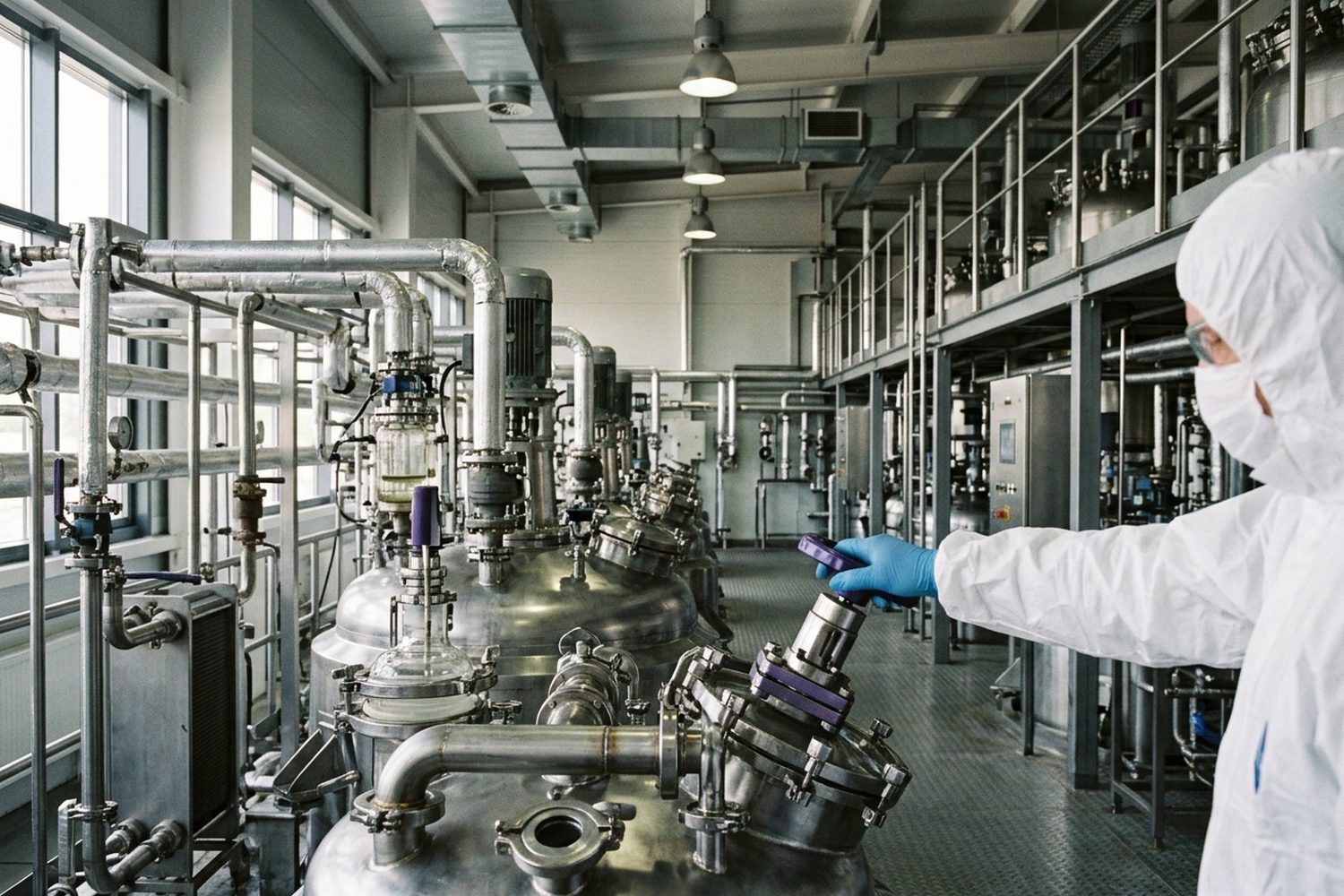
The core tension driving everything in this story comes down to a single manufacturing fact. Novo Nordisk makes semaglutide and liraglutide using recombinant DNA technology — engineered yeast cells that express the peptide, scaled up in fermentation tanks. Generic manufacturers build the same molecules from scratch using chemical synthesis, assembling them amino acid by amino acid. Two different processes, two different factories, two different impurity profiles, and the FDA has to decide whether the product coming out of the second factory is the same drug as the product coming out of the first.
In April 2026, Apotex and its partner Orbicular Pharmaceutical Technologies received the first FDA tentative approval for a generic semaglutide injection. Tentative means patent exclusivity periods are still running, but the regulatory pathway is now formally open. The first commercial GLP-1 generic is already in pharmacies. The second is in the queue.
Three questions drive everything that follows. How do you chemically build a thirty-one amino acid modified peptide at commercial scale without using biology to do it? How does the FDA determine that a chemically synthesized copy is the same drug as a biologically produced one? And what does it actually take to win an ANDA for a GLP-1 generic, from the first synthesis step to the approval letter? The answers are considerably more complicated than the drugs' breathless press coverage has ever suggested.
GLP-1, glucagon-like peptide-1, is a hormone the body produces on its own. Specialized cells called L-cells, lining the small intestine, manufacture it by cleaving a larger precursor protein called proglucagon. The job description is compact: when you eat, your gut releases GLP-1 into the bloodstream, the pancreas gets signaled to release insulin and stop releasing glucagon, digestion slows down, and the brain registers fullness. Blood sugar rises more slowly and falls back to normal more reliably. One hormone doing all of that simultaneously is evolutionary elegance, offered free of charge and without a press release.
The natural GLP-1 hormone has a half-life measured in minutes. An enzyme called dipeptidyl peptidase-4, DPP-4, degrades it rapidly once it enters the bloodstream. A therapeutic window measured in minutes does not support a weekly injection schedule, so the pharmaceutical version required substantial engineering.
Liraglutide is the first commercially successful result. At 28 amino acids, it is structurally close to natural GLP-1 but carries two modifications: an amino acid substitution and a C16 fatty acid chain attached to a lysine residue via a spacer molecule. That fatty acid chain causes liraglutide to bind reversibly to albumin, the most abundant protein in human blood. Albumin-bound liraglutide is largely shielded from DPP-4 degradation and is cleared far more slowly than the natural hormone. The result is a half-life long enough for once-daily dosing.
Semaglutide is the more engineered version. It contains 31 amino acids, and one of those is not a standard canonical amino acid. It is alpha-aminoisobutyric acid, known as Aib, which resists enzymatic cleavage at that position. Semaglutide also carries a fatty acid chain with a longer, more optimized linker than liraglutide's, designed for tighter albumin binding. The combination produces a half-life of approximately one week. One non-standard amino acid and a better linker is the entire engineering distance between a once-daily injection and a once-weekly one, which turns out to be worth tens of billions of dollars in patient compliance alone.
Tirzepatide's Structural Complexity Blocks Generic Entry
Tirzepatide runs to 39 amino acids and incorporates two non-canonical amino acids. Every additional structural complication represents additional synthesis complexity and additional analytical work for any manufacturer that tries to build one of these molecules from scratch, a point that matters considerably once generic manufacturers enter the picture.
The regulatory fact that drives everything downstream comes down to a single number. The Biologics Price Competition and Innovation Act brought proteins into the definition of biological products under the Public Health Service Act. The FDA interprets protein under that statute as any amino acid polymer with a specific defined sequence of greater than 40 amino acids. Polymers at or below 40 amino acids are classified as peptides and regulated as drugs under the Food, Drug, and Cosmetic Act. Semaglutide at 31 amino acids falls under that threshold. Liraglutide at 28 amino acids falls under it. Tirzepatide at 39 amino acids falls under it as well, which is the kind of margin that makes pharmaceutical lawyers sleep soundly.
That classification determines which regulatory pathway a generic manufacturer uses. A biologic requires a Biologics License Application, and a biosimilar requires extensive clinical data demonstrating no clinically meaningful differences from the reference product, a process that is slow and expensive by deliberate design. An Abbreviated New Drug Application for a drug requires demonstrating pharmaceutical equivalence and bioequivalence to the reference listed drug, a substantially faster and less expensive process. Because semaglutide and liraglutide are peptides below the 40-amino-acid threshold, their generic versions go through the ANDA pathway. Had these molecules crossed that line, the generic GLP-1 industry would be waiting decades rather than years, spending billions on clinical trials rather than filing paperwork. The 40-amino-acid boundary is what separates an ANDA from a biosimilar development program, and every generic manufacturer currently in this space is keenly aware of exactly which side of it they are standing on.
The structural modifications that make these drugs therapeutically useful also make them analytically complicated to replicate. A non-canonical amino acid like Aib is not identified by standard analytical equipment without specific method development targeted at that residue. An unusual fatty acid linker creates its own set of degradation products and process-related impurities. The profiles that result from manufacturing semaglutide or liraglutide occupy a middle ground between small-molecule chemistry and biologics, and the FDA approaches that middle ground with caution. What that caution requires in practice, in terms of impurity specifications, immunogenicity testing, and the specific analytical data the agency demands before approving a generic, is where the real difficulty of this whole enterprise begins.
The part most Ozempic coverage skips is that Novo Nordisk does not make semaglutide the way it makes insulin, by growing microorganisms that express the complete molecule. Nor does it assemble semaglutide the way most small-molecule drugs are made, from reagents in a reactor. Semaglutide occupies an uncomfortable middle ground, and that middle ground is the source of most of the regulatory complications that follow.
Semaglutide's Hybrid Fermentation-Chemical Production Process
The process starts in fermentation. Engineered yeast cells, carrying a recombinant DNA construct, express a peptide precursor backbone. The yeast does not produce finished semaglutide. It produces most of it. After fermentation and purification, the backbone undergoes chemical modification: an N-terminal fragment is attached, and that fragment contains the non-canonical amino acid Aib, the residue that resists enzymatic cleavage and gives semaglutide its week-long half-life. Then the fatty acid linker, designed for tight albumin binding, is attached. The finished molecule is partly biological in origin and partly the product of synthetic chemistry. The accurate term is semi-synthetic. Of 38 recently approved small peptide drugs studied across the industry, seven involved recombinant expression, and all seven also required subsequent chemical modifications to the backbone. Semaglutide is not unusual in using a hybrid process. It is unusual in being worth eighteen billion dollars a year.
Liraglutide follows the same architecture. Recombinant expression produces the backbone, then the C16 fatty acid chain with its linker spacer is covalently attached through chemical modification. Two drugs, related processes, the same handoff from biology to chemistry.
Biology handles long stretches of standard amino acids efficiently. Chemistry handles what biology cannot, specifically the insertion of non-standard residues. Aib has no codon in the standard genetic code. A yeast cell cannot be instructed to encode it directly. Fermentation produces the backbone, and then chemists finish the job.
Tirzepatide compounds this problem. With two non-canonical amino acids in its 39-residue sequence, compared to semaglutide's one, the barriers to any recombinant step double. Tirzepatide is produced entirely by chemical synthesis, no biological stage involved. Each additional non-canonical residue brings its own impurity profile and its own analytical burden, a point that matters considerably when generic manufacturers attempt to replicate these molecules using chemistry alone.
That is exactly what generic manufacturers must do. The originator's yeast expression system is proprietary. Generic makers are not licensing it, and the ANDA pathway does not require replicating the fermentation step. They synthesize the entire molecule chemically — all 31 amino acids of semaglutide, including Aib, built sequentially from scratch. Two entirely different manufacturing processes, producing molecules the FDA must determine are the same drug. The impurity profiles from biological and chemical manufacturing differ by construction, because the two processes involve different reagents, different intermediates, and different degradation pathways.
Clayton, North Carolina is where Novo Nordisk produces the active pharmaceutical ingredient for its GLP-1 drugs for the United States market. Groundbreaking was March 2016, the largest life science investment in North Carolina history at that point. The facility completed in 2020 and received LEED Gold certification. Its process activities are fermentation, recovery, and purification. In 2019, Novo Nordisk acquired a Durham facility for tableting and packaging oral medications, and the first oral GLP-1 treatments shipped from Durham in 2021.
The new Clayton facility under construction is a separate aseptic manufacturing and finished product complex, distinct from the existing API operations. It handles the downstream steps that transform bulk drug substance into injectable products and is expected to be operational between 2027 and 2029.
Novo Nordisk Acquires Catalent for Fill-Finish
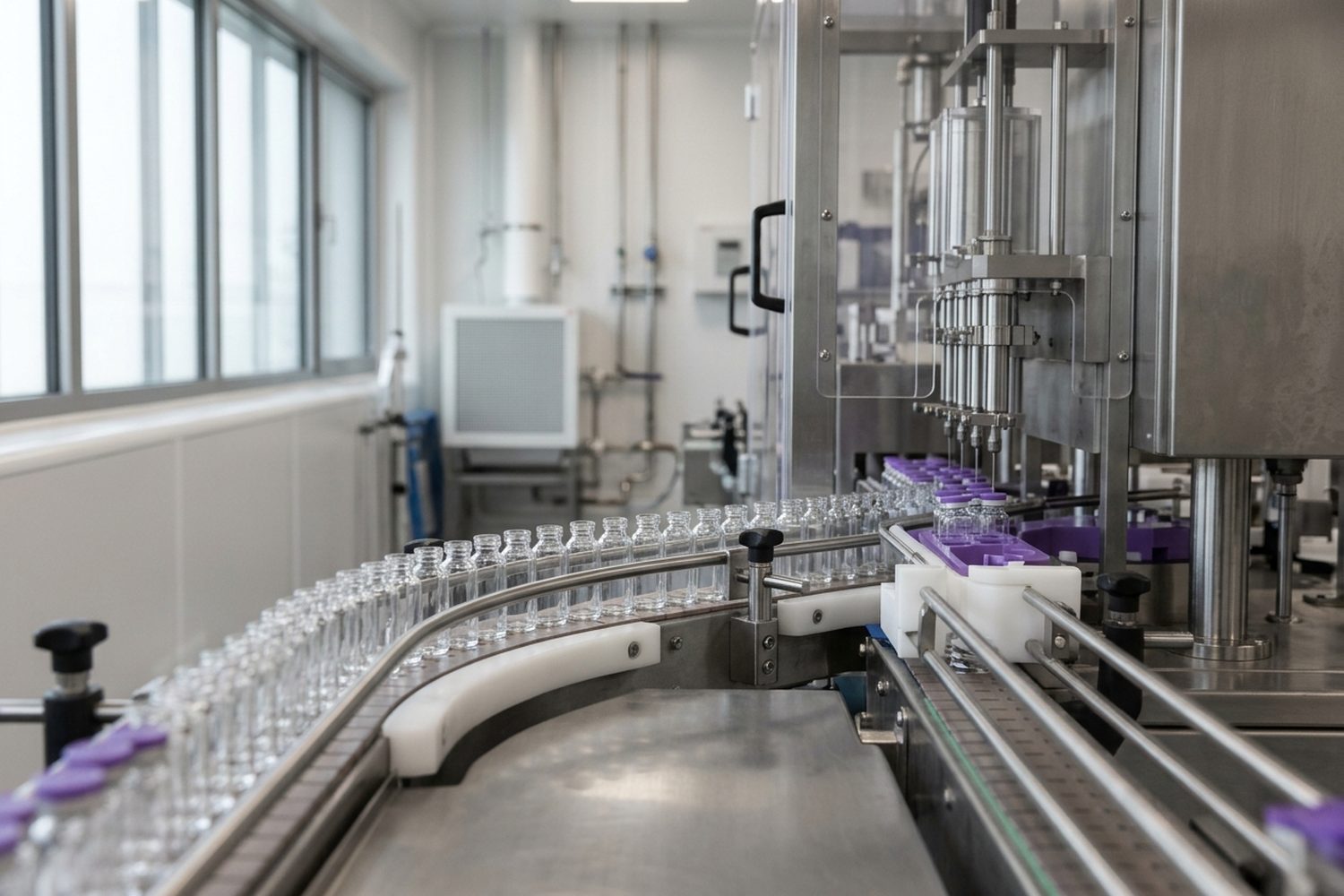
The Catalent acquisition secured the downstream end of the supply chain. Three Catalent sites — Anagni in Italy, Bloomington in Indiana, and Brussels in Belgium — transferred directly to Novo Nordisk as dedicated fill-finish operations. The bottleneck was never synthesis and never fermentation. It was the final step, where finished drug gets loaded into the injection devices patients actually use. Novo Holdings paid sixteen and a half billion dollars to own that step. The molecule that took decades to engineer was being constrained at the packaging line.
The question standing in front of every generic manufacturer is deceptively simple: if the originator uses yeast fermentation to build most of the molecule and then finishes it chemically, how does a generic maker reproduce the same drug without access to any of that proprietary biology? The answer is solid-phase peptide synthesis, and calling it a solution is technically accurate in the same way that calling Everest a hill is technically accurate.
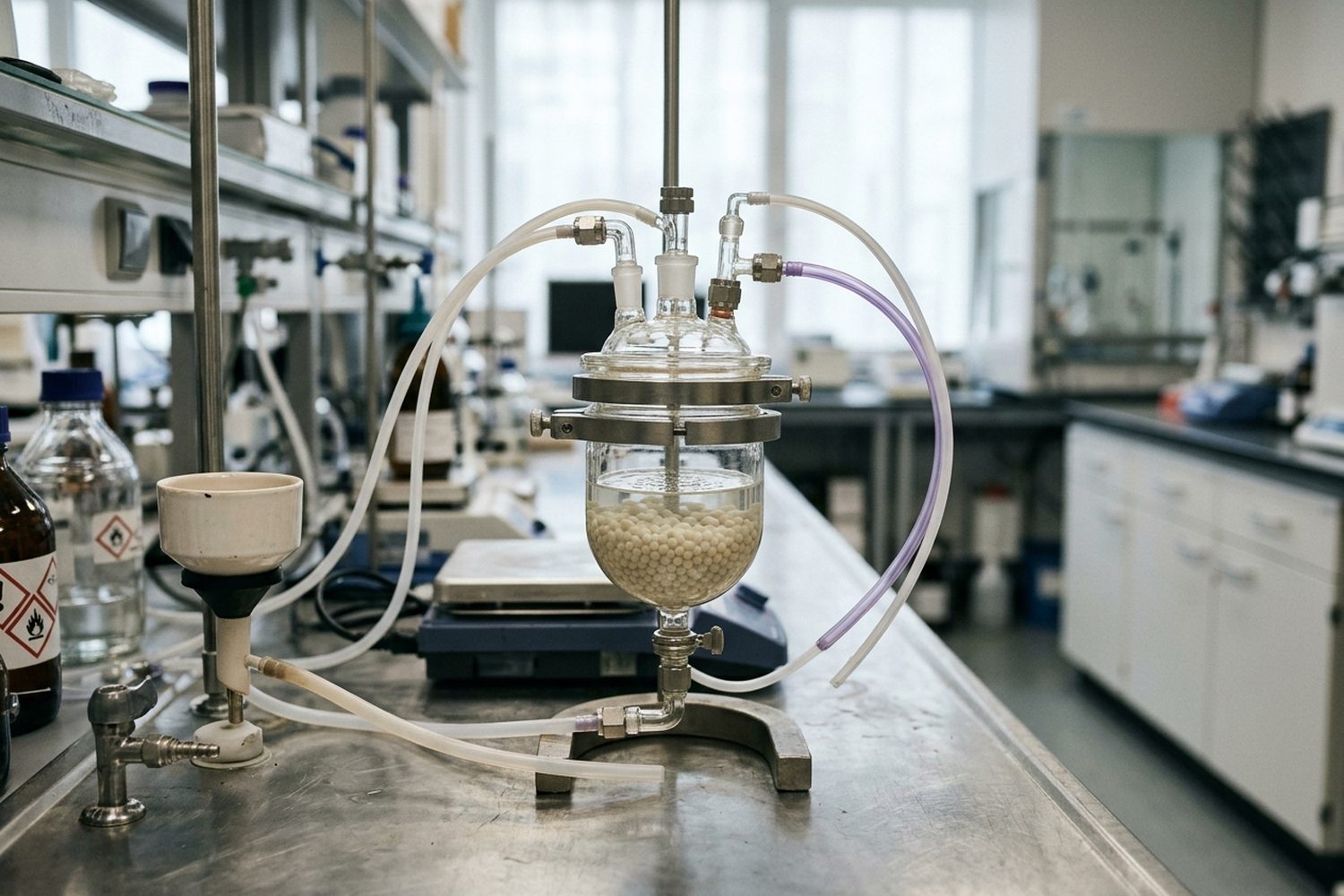
Here is how SPPS works. You start with a solid resin bead and attach your first amino acid to it. Then you add the next amino acid, couple it to the chain, wash away the reagents, and repeat. For semaglutide at 31 amino acids, that means 30 or more sequential coupling cycles before you even think about cleavage. Each cycle uses the Fmoc strategy, in which a fluorenylmethoxycarbonyl protecting group shields the amine of each incoming residue until the coupling step is done, then gets removed before the next round starts. Thirty-plus times for semaglutide. Forty-plus for tirzepatide at 39 amino acids. The process involves protecting groups that shield reactive sites, coupling reagents that activate each incoming amino acid, and washes that remove excess reagents between every cycle. It is extremely repetitive, which is not normally what you want from a process where every step introduces new opportunities for error.
The compounding problem is that no coupling step runs at one hundred percent efficiency. Each one falls slightly short, and those imperfections stack across three dozen cycles. You end up with truncated sequences, deleted residues, amino acids that got modified when they should not have, and chains that aggregated mid-synthesis. By the time you cleave the finished peptide off the resin and look at what you actually have, the product is a mixture. Conventional sequential SPPS of liraglutide produces crude purity around twenty-five percent, with thirty-seven percent recovery after purification. More than half of what you made never becomes drug. The rest becomes the waste stream, and about the waste stream: solid-phase synthesis generates on the order of thirteen thousand kilograms of solvent and resin waste per kilogram of peptide API produced. The drug itself is practically a rounding error compared to what goes in the dumpster. When pharmaceutical executives describe GLP-1 generics as presenting manufacturing challenges, this is the polite version of what they are referring to.
The industry has not been passive. One approach for semaglutide uses a two-step hybrid strategy: Fmoc-based SPPS builds a tetrapeptide fragment, while a separate E. coli fermentation system expresses the bulk of the backbone as inclusion bodies using protein fusion tags in an X-Y-D4K-G pattern. The two pieces are then joined, with on-column refolding, on-column enzyme cleavage, and one-step purification used to prevent precipitation. An optimized N-terminal protein tag significantly boosts inclusion body expression yield. This borrows from both synthetic chemistry and biology without requiring Novo Nordisk's proprietary yeast system.
Resin-Stapled Elongation Assembles Liraglutide Fragments
For liraglutide, a different approach called resin-stapled elongation covalently stitches two peptide fragments together on the resin using orthogonal protection chemistry, so neither fragment interferes with the other before the planned connection. The stitching step takes nine to sixteen hours at room temperature and is the most time-consuming part. The result is crude purity around fifty percent and recovery around seventy-six percent, roughly double the performance of conventional sequential SPPS. The OBIMAP process that implements this approach does so while maintaining the same solvent use as the conventional method. Three times longer to run for roughly double the purity. Whether that trade-off is attractive depends entirely on whether the impurity profile problem matters more than the cycle time, and for generic drug approval, the impurity profile problem matters enormously.
Tirzepatide, at 39 amino acids with two non-canonical residues, handles the length problem differently: the chain gets broken into four separate fragments that are synthesized individually and then conjugated together. Four shorter synthesis runs, each cleaner than one continuous forty-step process, assembled at the end. The fragment conjugation approach reflects where the field is moving for anything above thirty residues, because at that length, sequential SPPS starts producing impurity profiles that purification alone cannot fully resolve.
After all of that, synthesis and cleavage and purification, comes the fatty acid acylation step, where the linker and fatty acid chain get chemically attached to extend the molecule's half-life. That step has its own chemistry, its own reagents, and its own impurity profile. The finished molecule coming out of this entire process has to be analytically indistinguishable from what emerged from a yeast fermenter in North Carolina. That requirement is where the next layer of difficulty begins.
The regulatory puzzle sitting at the center of all this chemistry is both elegant and strange. The originator makes its drug using yeast fermentation and chemical finishing. The generic maker builds the same molecule entirely from scratch using solid-phase synthesis. Two completely different processes, two completely different impurity profiles, and the FDA has to decide whether what comes out of the second factory is, under the law, the same drug as what came out of the first. This is not a hypothetical edge case. This is the actual question the agency had to answer before any generic GLP-1 could exist, and it took them about a decade to answer it.
The standard ANDA pathway requires a generic applicant to show pharmaceutical equivalence to the reference listed drug and bioequivalence to it. Pharmaceutical equivalence means same active ingredient, same dosage form, same route of administration, same strength. Bioequivalence means the drug gets into the bloodstream at the same rate and to the same extent. That framework works perfectly well for a tablet of metformin. For a 31-amino-acid peptide synthesized by one company using biology and by another company using chemistry, the question of whether they constitute the same active ingredient requires a more uncomfortable conversation.
The FDA's Office of Generic Drugs and Office of Pharmaceutical Quality concluded in 2017 that analytical technology had advanced far enough to actually have that conversation. The agency issued guidance that year establishing that a synthetic peptide drug product could be submitted as an ANDA even when the reference listed drug was produced via recombinant DNA technology. The position was that an ANDA applicant could demonstrate their synthetic active ingredient was the same as the rDNA-derived one, if they produced the analytical data to prove it. The guidance did not say this was easy. It said it was permitted.
FDA's 2021 Peptide Guidance Excludes Semaglutide
That guidance was revised and expanded in May 2021. The revised version covered exactly five peptides: glucagon, liraglutide, nesiritide, teriparatide, and teduglutide. Semaglutide was not on the list. The five drugs that made the cut had simpler characterization histories and in most cases shorter, less complicated molecular architectures than semaglutide. Liraglutide at 28 amino acids qualified. Semaglutide at 31 amino acids, with its hybrid semi-synthetic originator process and a non-canonical amino acid embedded in the backbone, did not. The omission was deliberate.
The analytical bar for demonstrating sameness on a peptide is considerably higher than for a small molecule. For a traditional generic, you confirm the chemical structure and move on. For a peptide, the FDA requires demonstration of sameness at the level of primary structure, which is the amino acid sequence, secondary structure, meaning the local folding of the chain, tertiary structure, meaning the three-dimensional conformation of the whole molecule, and aggregate levels, meaning how much of the drug has clumped together in ways the immune system might not appreciate. That last requirement exists because aggregated peptide impurities are among the things most associated with unwanted immune responses in patients, which is a polished way of saying the FDA does not want people injecting themselves weekly with something that triggers antibody formation against their own GLP-1.
The ANDA pathway does not require independent clinical efficacy trials. That is its commercial attraction. A biosimilar development program for a biologic would require exactly those trials at extraordinary cost, often a billion dollars and a decade of work. The ANDA route substitutes rigorous analytical and bioequivalence data for the clinical program, which is a reasonable trade for molecules below the 40-amino-acid threshold. For generic injectable solutions that are qualitatively and quantitatively identical to the reference listed drug, bioequivalence may qualify for a waiver entirely, skipping the pharmacokinetic study in humans. Whether a given semaglutide generic will qualify for that waiver is one of the questions the new product-specific guidances are expected to address.
In July 2026, the FDA withdrew the May 2021 guidance entirely, stating it no longer reflected the agency's current scientific thinking. The agency replaced it with revised product-specific guidances covering seventeen peptide products. The Federal Register notice ran on July 29, 2026. The expansion from five peptides to seventeen, and the move from a single umbrella guidance to individual product-specific documents, means the science diverged enough that one framework could not cover it all. When the FDA goes from five to seventeen and burns the original document, the message is that the cases are no longer similar enough to generalize.
Health Canada approved the first generic semaglutide on April 28, 2026, 114 days after exclusivity expired. The agency's documentation noted the absence of a pre-established equivalence standard for synthetic copies of semi-synthetic rDNA products. That note is regulators acknowledging in writing that they built this particular plane while flying it.
In September 2025, the FDA co-hosted a two-day workshop with the Center for Research on Complex Generics specifically on navigating the GLP-1 generic drug pathway, covering API characterization, recombinant production issues, and device requirements. Workshops like this serve a particular function: they are how agencies signal, in a deniable and collegial format, that the existing guidance is insufficient and the community needs to work out the new rules before anyone has to write them down officially.
Proving Molecular Identity Across Synthesis Differences
All of that synthesis work — the resin beads, the coupling cycles, the solvent waste piling up by the ton — culminates in a single question the FDA needs answered: is the molecule you made the same molecule as the one in the reference drug? For a tablet of ibuprofen, that question takes about an afternoon. For a 31-amino-acid peptide synthesized via a completely different process than the originator used, it takes considerably longer and requires equipment that costs more than most people's houses.
The FDA's sameness standard for generic peptide injections requires demonstration of the same primary structure, meaning the amino acid sequence, the same secondary structure, meaning local folding patterns along the chain, the same tertiary structure, meaning the full three-dimensional shape of the molecule, and equal or lower aggregate levels compared to the reference listed drug. Aggregates are clumps. Peptides clump. Clumped peptides are particularly effective at triggering immune responses, which is not a property you want in a drug someone injects weekly for years. So the aggregate requirement is not bureaucratic caution. It reflects a genuine immunogenicity concern, and it is the part of the specification that makes the analytical work hard.
The tool the field uses to demonstrate primary structure sameness is UPLC-HRMS peptide mapping, ultra-performance liquid chromatography combined with high-resolution mass spectrometry. The approach uses two enzymes, Glu-C and chymotrypsin, which cleave the peptide chain at different positions. Neither enzyme alone covers the full sequence. Together, combining peptide maps from both digests achieves full sequence coverage of semaglutide and liraglutide, with each resulting fragment identified by mass at an error below ten parts per million. That level of precision allows a direct comparison between the synthetic generic and the rDNA originator product, fragment by fragment, down to a single amino acid substitution anywhere in the chain. It is, in the driest possible sense, a very expensive way to check your homework.
Peptide-related impurities must be structurally identified at 0.10 percent or higher. Any new specified impurity found in the generic but not in the originator must not exceed 0.5 percent of the drug substance and must be justified as not affecting safety or effectiveness. These thresholds exist because peptide impurities do not behave like small-molecule impurities. The conventional ICH Q3A and Q3B guidelines were designed around toxicological exposure: estimate how much impurity a patient ingests daily and set limits accordingly. That logic works for a statin. It does not adequately address a peptide impurity that folds incorrectly and teaches the immune system to produce antibodies against the drug, or worse, against the patient's own GLP-1. The impurity is not poisoning anyone chemically. It is creating an immunological problem, which is a categorically different kind of bad.
The impurity classes that show up in GLP-1 solid-phase synthesis are a thorough catalog of what can go wrong when you repeat the same chemistry thirty or more times in a row. Amino acid substitutions, where the wrong residue gets incorporated. Deletions, where a coupling step fails and the chain simply skips a residue, producing a slightly shorter molecule that is wrong in a very specific way. Oxidation and deamidation, which are standard degradation products. Racemization, where an amino acid flips its spatial orientation and produces a stereoisomer the body handles completely differently. Diketopiperazine formation at the N-terminus. Pyroglutamate formation. And aggregation at every stage of the process, because peptides in solution are essentially always looking for an excuse to clump. A 2024 analysis of sixteen injectable semaglutide follow-on products, eight oral semaglutide follow-on products, and two injectable liraglutide follow-on products found amino acid deletions, additions, and unidentified impurities alongside high-molecular-weight proteins, trace metals, residual solvents, and counterions absent from the originator products. Follow-on liraglutide products showed reduced physical stability. Compounded semaglutide showed significant disparity in strength, impurity sum, and high-molecular-weight protein content when exposed to light. None of this is reassuring if you are the regulatory agency overseeing weekly injections into several million patients, which is a job description that sounds bad enough already.
Shelf Life Samples Constrain Generic Comparative Studies
Comparative studies require evaluation at timepoints close to batch release and near the end of shelf life. Accelerated stability data can support those studies but cannot replace real aged samples. Getting those samples is itself a constraint, because a generic manufacturer needs multiple batches of the reference listed drug at both ends of the shelf life, and Novo Nordisk has not publicly expressed enthusiasm for helping its competitors clear the regulatory bar. Industry practice runs comparative studies on a minimum of three generic product batches manufactured from at least two different API batches, to confirm that sameness is consistent across production runs rather than a statistical anomaly from one lucky synthesis. The FDA guidance technically states only that a statistically valid number of batches must be evaluated, which is regulatory language for the answer exists and they trust you to find it.
What the tentative approval granted to Apotex and Orbicular in April 2026 actually validated was that this entire analytical package, the peptide mapping, the impurity characterization, the structural comparisons, the aggregate controls, can be assembled into a filing the FDA will accept. Orbicular is an India-based specialty CDMO that provided the development, advanced analytical characterization, and regulatory strategy that got the semaglutide dossier across the line. Bachem, the Swiss peptide manufacturer, is scaling SPPS capacity to supply GLP-1 API at volumes the market has never seen, serving both branded manufacturers and the incoming generics simultaneously.
The peptide characterization framework required here scales with molecular weight and chain length. Liraglutide at 28 amino acids is analytically slightly simpler than semaglutide at 31, and both are considerably simpler than anything above 40 residues would be. The fact that all three major GLP-1 analogs sit below the 40-amino-acid threshold is not a coincidence of biology. It reflects decades of drug design choices where one of the implicit design constraints was keeping the molecule short enough to manage. The designers were thinking about half-life and receptor binding. The analytical chemists building the generic dossiers are currently grateful for the constraint anyway.
What this entire story demonstrates is that the pharmaceutical industry spent decades developing tools for biologics characterization that turned out to be exactly what was needed to validate synthetic copies of semi-synthetic peptides. The UPLC-HRMS platforms, the higher-order structure methods, the immunogenicity risk frameworks, the aggregate controls, all came from the biosimilar world and got redirected here. The molecules are regulated as drugs, but the analytical requirements share more with a biosimilar dossier than with a conventional small-molecule generic submission. That is the practical consequence of existing at the boundary between chemistry and biology, where semaglutide has lived since the first synthesis paper. The commercial prize at the end of this process is large enough that every analytical, manufacturing, and regulatory barrier will eventually be solved. Most of them already have been, which is either encouraging news for patients or deeply alarming news for Novo Nordisk, and the distinction depends entirely on which side of the patent portfolio you are standing on.
Start here
-
Who Actually Makes Semaglutide API?
Semaglutide API manufacturers range from Novo's own plant to peptide CDMOs and a blurry crowd of traders. See who actually makes it and what regulators ask.
-
Peptide Manufacturing, From Resin to Vial
A step-by-step look at peptide manufacturing for GLP-1 drugs, from resin synthesis and purification to fill-finish, and why generics makers must build the plant first.
-
Solid-Phase Peptide Synthesis: Merrifield's Trick at Industrial Scale
Solid phase peptide synthesis builds GLP-1 drugs one amino acid at a time on resin. Learn how the cycle works, why long chains lose yield, and the waste.


Everything else we have written
- Novo Holdings, Catalent and the $16.5 Billion Fill-Finish Purchase
What a CDMO is, explained through Novo's $16.5 billion Catalent deal and $11 billion fill-finish plant purchase, and why renting factory time got costly.
- CDMO Meaning: What a Contract Developer-Manufacturer Does
The cdmo meaning is contract development and manufacturing organization. Here is how it differs from a CMO and why GLP-1 peptide makers lean on it.
- Peptide Drug Examples: The Molecules FDA Treats as Drugs
Peptide examples the FDA treats as generic candidates: five named drugs, the 17 newer guidances, and what a copy must prove about structure, clumps and batches.
- Peptide vs Protein: The FDA's 40-Amino-Acid Line
Peptide vs protein, as the FDA draws it: a count of 40 amino acids. See why semaglutide at 31 and tirzepatide at 39 can take the generic ANDA route.
- Generic Peptide Drugs: A Short History of a Hard Category
A plain account of generic peptide drugs in the U.S.: why only synthetic copies qualify for ANDA, the 0.5 percent impurity rule, and the five covered products.
- The Drug Master File: A Peptide Maker's Most Important Document
How a drug master file lets a peptide maker keep its process secret while a generic company relies on it in an ANDA, and what the file must prove for GLP-1 generics.
- What It Actually Costs to Make Semaglutide
Nobody has published a semaglutide manufacturing cost per dose. Here is what is known about raw materials, factories and approvals, and what they imply for generics.
- DMF Is on Its Way Out. Peptide Chemists Need a New Solvent.
Green peptide synthesis for GLP-1 drugs: why solvent waste runs near 13,000 kg per kg of API, which alternatives exist, and how FDA impurity rules slow adoption.
- How to Qualify a Peptide API Supplier
How a generic maker qualifies a peptide supplier: plant audits, Drug Master File review, change control and dual sourcing, and why peptide impurities make each step harder.
- The GLP-1 Supply Chain: Capacity, Bottlenecks and Who Is Building
How glp-1 peptides get made and why supply ran short: one sentence on capital, contract capacity, raw materials and skilled workers, read clause by clause.
- GMP Peptide Manufacturing: What an Inspector Looks At
How gmp peptide manufacturing is inspected: where regulated steps start, why validated processes freeze, and what a warning letter does to a CDMO's clients.
- The Fatty-Acid Side Chain That Makes Semaglutide Last a Week
The semaglutide structure is a 31-amino-acid peptide with one Aib residue and a fatty acid linker that binds albumin, and this explains how generics copy it.
- Purification Is the Real Bottleneck in Peptide Manufacturing
Peptide purification is where synthetic GLP-1 makers separate one target molecule from near-identical impurities. See why the step strains columns, solvent and filings.
- Hybrid and Liquid-Phase Peptide Synthesis: The Way Around the Resin
Liquid phase peptide synthesis and fragment condensation explain how GLP-1 makers cut solvent waste and catch errors early, versus one-bead solid-phase builds.
- Coupling Reagents in Peptide Synthesis: The Chemistry Nobody Thanks
How coupling reagents work in peptide synthesis, why 30 to 40 coupling cycles make the choice matter for semaglutide, and what drives cost, waste and hazard.
- Custom Peptide Synthesis: Why Grams and Tons Are Different Businesses
Custom peptide synthesis runs from a one gram research batch to 100 kilograms under GMP. See why the cost, waste and regulatory burden change at each scale.
- How Peptide CDMOs Win (and Lose) GLP-1 Work
A peptide CDMO builds GLP-1 drugs under contract. See who the big names are, how capacity deals get funded, and why pills and generics could change the math.
- Peptide Impurities and Immunogenicity: The 0.5% Rule
How FDA rules treat peptide impurities in synthetic generic GLP-1 drugs: the 0.10% and 0.5% lines, immunogenicity testing, and what studies show so far.
- The FDA Guidance That Lets a Synthetic Peptide Copy an rDNA Drug
The anda peptide pathway lets a chemistry-made peptide copy an rDNA brand. Learn what sameness requires, the impurity limits, and what replaced the 2021 FDA guidance.
- Liraglutide API: The Peptide That Trained the Generic Industry
Liraglutide API explained: why generic versions are made synthetically while Victoza is recombinant, and what FDA sameness, impurity and immunogenicity rules demand.
- Recombinant vs Synthetic Semaglutide: Same Molecule, Different Problems
Semaglutide manufacturing differs by route: Novo uses yeast, generics use solid-phase synthesis. See how that split shapes ANDA rules, impurity limits and approvals.
| Area | What the FDA asks for |
|---|---|
| Sameness | The same amino acid sequence and the same higher-order structure as the reference drug, shown with structural and physical-chemical data |
| New impurities | None above 0.5 percent, and each one between 0.10 and 0.5 percent identified and justified |
| Immune risk | Evidence that any new impurity does not make the peptide more likely to trigger an immune response |
The full checklist adds the comparative characterisation package, the in silico and in vitro immunogenicity work, the manufacturing evidence reviewers ask for and the questions that have delayed past peptide applications.
The Generic Peptide ANDA Readiness Checklist
The FDA expectations for a synthetic GLP-1 ANDA referencing an rDNA product, in one checklist: sameness, impurity thresholds, immunogenicity risk work, and the manufacturing evidence reviewers ask for.